
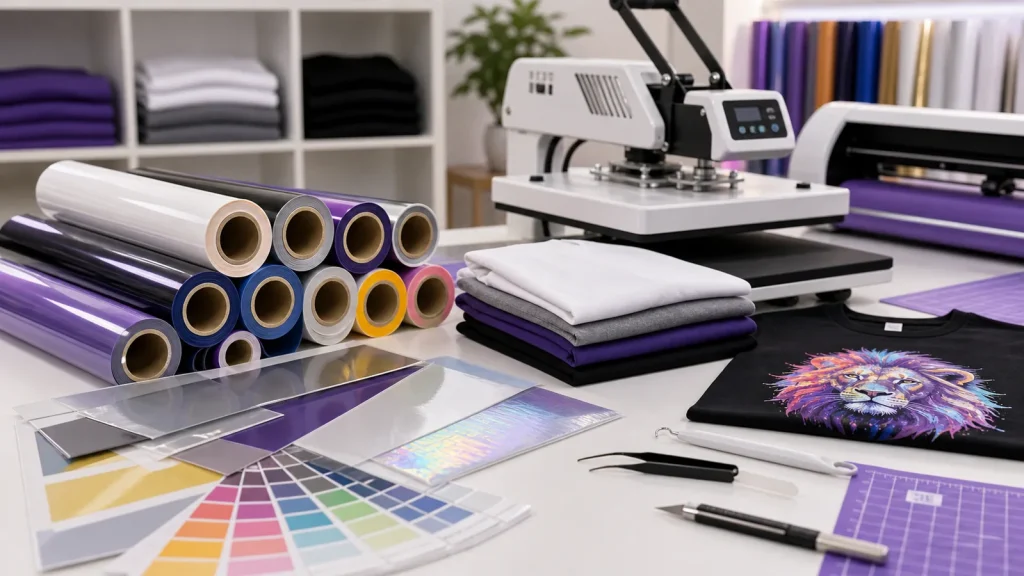
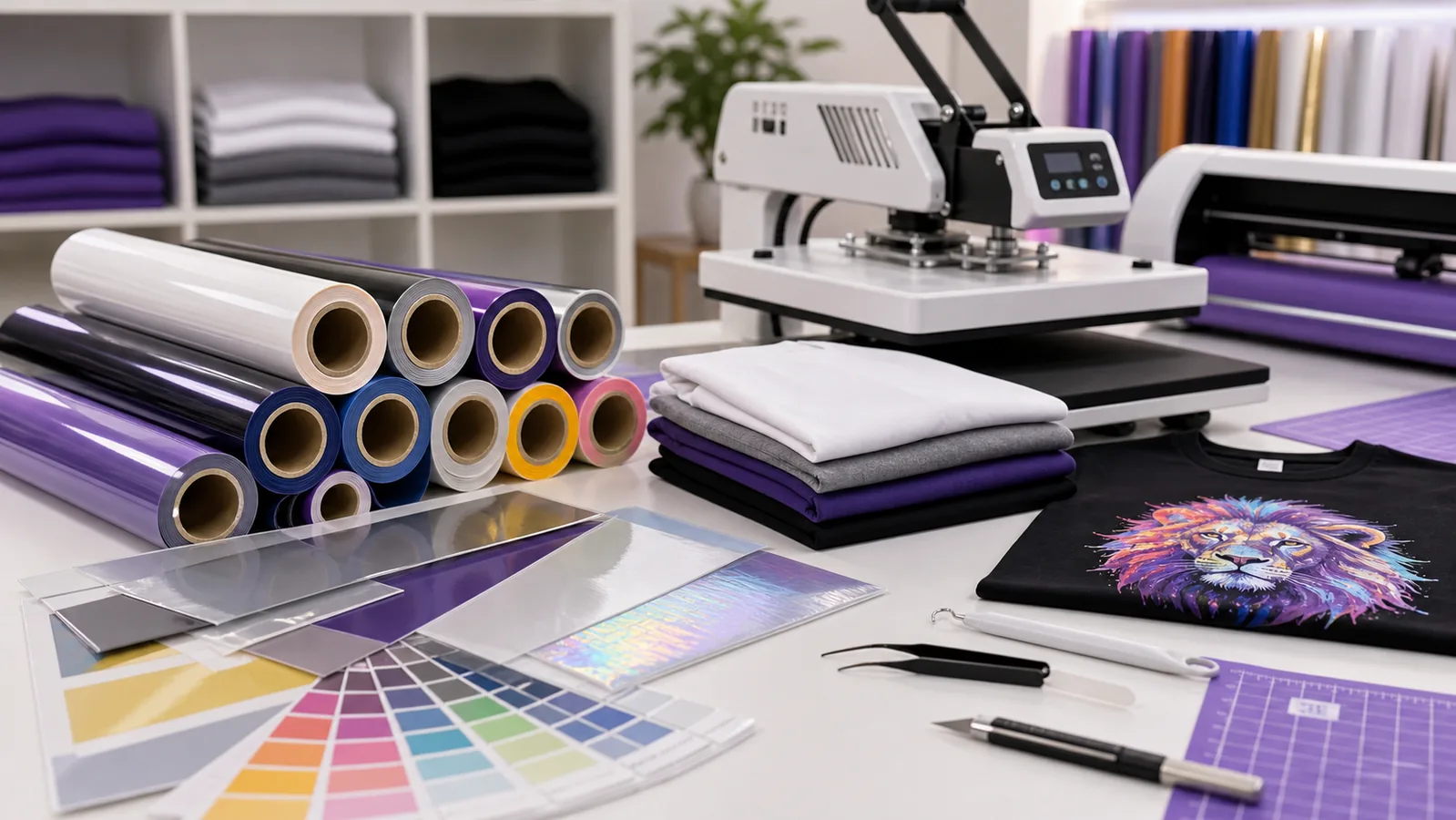
For apparel customization, the heat press machine is only one part of the production result. The transfer material decides color, feel, stretch, wash resistance, and the type of fabric you can serve. Choosing the right vinyl or film helps a workshop reduce waste and build products that customers reorder.
Start with the application, not only the price
Different apparel products require different materials. Sportswear may need stretch and soft touch. Workwear may need stronger adhesion. Promotional T-shirts may need a fast and economical workflow. Before comparing prices, confirm fabric type, design size, washing requirements, and expected order volume.
Buyers should also consider storage conditions, cutting difficulty, peeling method, and whether the material is suitable for manual production or a higher-output workflow.
Film categories buyers usually compare
Heat transfer vinyl is useful for names, numbers, logos, and simple graphic production. Transfer papers and sublimation materials can support photo-style output on suitable blanks. DTF support materials, including film and powder, can be useful when a buyer also runs printed transfer production beside heat press products.
A practical supplier should help you match the material to the machine and final product, not simply provide a catalog list. Testing is still important because fabric surface, coating, and operator habits can change the result.
How to reduce material problems
Keep sample rolls or sheets for testing before a bulk purchase. Label every test with temperature, time, pressure, fabric, and peeling method. Store films away from moisture, heat, and dust, especially if you plan distributor or repeat-order supply.
Hybons can help build a basic consumable list for T-shirts, bags, caps, mugs, and gift products, so buyers can prepare machines and materials as one working system.